TSI-003 | TechSenseIndia
Published Date:- January 28th
ev-fast-charging-2026
Introduction
Electric vehicles (EVs) are evolving rapidly, and one of the biggest concerns for drivers is charging speed. In 2026, advancements in battery technology and charging infrastructure are making EV fast charging more efficient than ever. This blog explores how fast charging is improving, the latest technologies, and what it means for EV owners.
| EV Model | Battery Capacity | Current Charging Speed | Expected 2026 Speed | Time to 80% | Pros | Cons |
|---|---|---|---|---|---|---|
| Tata Nexon EV | 40 kWh | 50 kW DC Fast | 120 kW DC Fast | Current: 45 min / 2026: 25 min | Affordable, compact, improving speed | Range still moderate |
| MG ZS EV | 72 kWh | 75 kW DC Fast | 150 kW DC Fast | Current: 40 min / 2026: 22 min | Spacious, long-range, faster charging soon | Charging network still limited in smaller cities |
| Hyundai Creta EV | 55 kWh | 50 kW DC Fast | 120 kW DC Fast | Current: 40 min / 2026: 20 min | Compact SUV, urban friendly, improving charge | Availability limited in tier-2 cities |
| Mahindra XUV EV | 70 kWh | 75 kW DC Fast | 150 kW DC Fast | Current: 42 min / 2026: 22 min | Spacious, long-range, fast upcoming charging | Heavy, needs strong charger network |
1. Current Fast Charging Standards ⚡
As of 2026, several fast charging standards dominate the market:
- CCS (Combined Charging System): Widely used in Europe and the US. Charging rates up to 350 kW are becoming common.
- CHAdeMO: Popular in Japan; supports up to 100 kW, with newer versions pushing faster rates.
- Tesla Supercharger V4: Delivers up to 500 kW for compatible EVs.
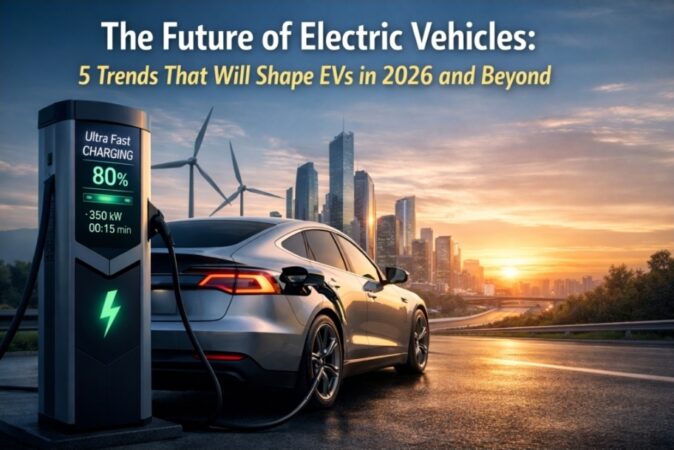
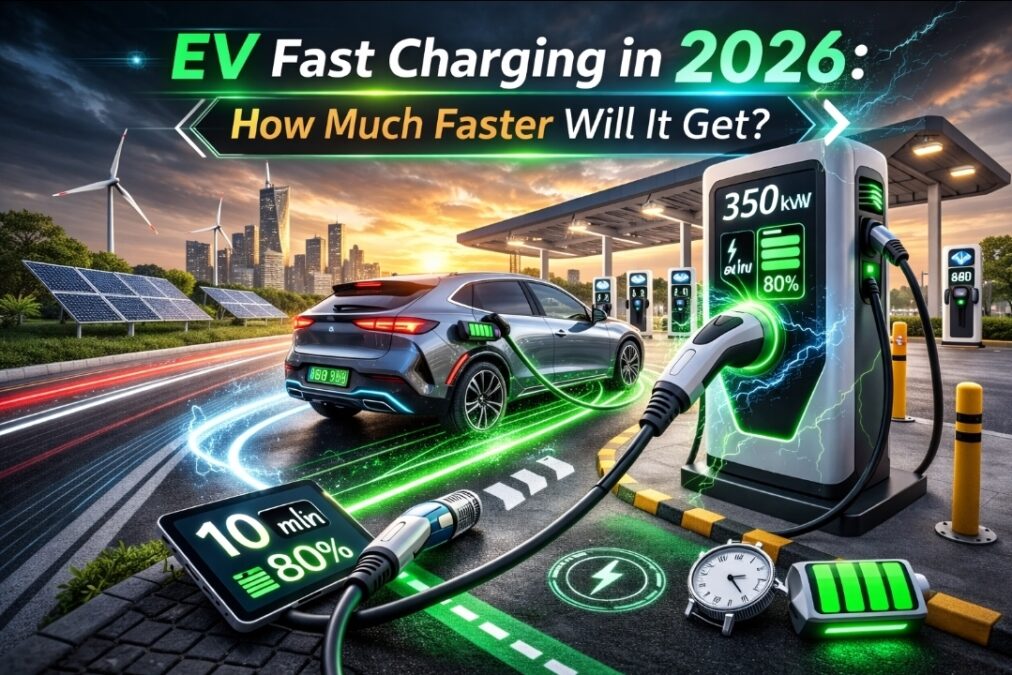
Impact: Many modern EVs can charge from 10% to 80% in 15–20 minutes, a significant improvement from earlier generations.
Looking for a futuristic Electric 2 wheeler?
2. Battery Technology Improvements 🔋
Charging speed is closely linked to battery chemistry and design.
- Solid-State Batteries: Faster charge acceptance and higher energy density.
- Thermal Management: Advanced cooling systems allow higher currents without degrading battery health.
- Battery Packs with Higher Voltage: 800V+ systems enable faster energy transfer.
These technologies reduce charging time and extend battery lifespan, making long-distance travel more practical.
Looking for Budget smartphones?
3. Ultra-Fast Chargers Coming in 2026 ⚡🚗
Charging infrastructure is also catching up:
| Charger Type | Power Output | 10–80% Charge Time (approx) |
|---|---|---|
| Tesla V4 Supercharger | 500 kW | 15–20 mins |
| Ionity Ultra-Fast | 350 kW | 18–22 mins |
| ABB Terra HP | 360 kW | 17–20 mins |
| Fastned High Power | 300–350 kW | 20 mins |
Note: Actual times vary based on battery type, vehicle state of charge, and temperature.
4. The Role of Smart Charging and Grid Management ⚡🏙️
- Dynamic Load Balancing: Smart chargers adjust power output to prevent grid overload.
- Vehicle-to-Grid (V2G): Some EVs can supply energy back to the grid during peak demand.
- Peak Shaving: Charging during off-peak hours optimizes energy usage.
These systems make ultra-fast charging feasible without stressing the electricity grid.
Looking for a charger ?
5. Regional Differences in Fast Charging ⚡🌍
- Europe: Rapid expansion of CCS ultra-fast chargers along highways.
- US: Tesla’s Supercharger network dominates; third-party networks growing.
- Asia: Japan and South Korea continue to lead with CHAdeMO, while China is scaling high-power DC fast chargers rapidly.
EV owners need to plan trips according to available fast charging infrastructure.
6. What It Means for EV Owners 🏎️
- Reduced Downtime: Long-distance trips are becoming as convenient as internal combustion vehicles.
- Better Planning: High-speed charging allows for fewer stops.
- Battery Health: Modern fast charging tech minimizes long-term battery degradation.
7. Future Outlook 🔮
By late 2026:
- 10–80% charging in under 15 minutes may become common for many EVs.
- 800V+ battery systems will support ultra-fast chargers without thermal risks.
- Integrated apps will allow real-time charger availability and smart scheduling.
EV fast charging is becoming a seamless part of the EV ecosystem, making electric mobility more practical and convenient than ever.
Conclusion
EV fast charging in 2026 is faster, safer, and smarter than previous generations. Advancements in battery technology, charger infrastructure, and grid management are reducing charging times drastically. For EV owners, this means shorter waits, smoother long-distance travel, and a more practical EV experience. The future of electric mobility is not just about going green—it’s about going fast.
Check Latest Price & Offers
For collaborations or official enquiries: 📩 Sathish@techsenseindia.in

Sathish G is a retail and consumer electronics professional with hands-on experience in audio and large format retail operations. He writes about gadgets, EV updates, and audio products with a focus on practical buying guidance and real-world usability.