TSI-047 | TechSenseIndia
Published Date: 10 March, 2026
ai-gadgets-2026
Introduction
AI is no longer limited to software—it’s becoming part of everyday gadgets that make life easier, smarter, and more connected. In 2026, AI-powered devices are moving from novelty to necessity, with smart assistants, wearable tech, home automation, and personal productivity tools changing how we live and work. This guide highlights the AI gadgets that will actually make a difference in daily life.
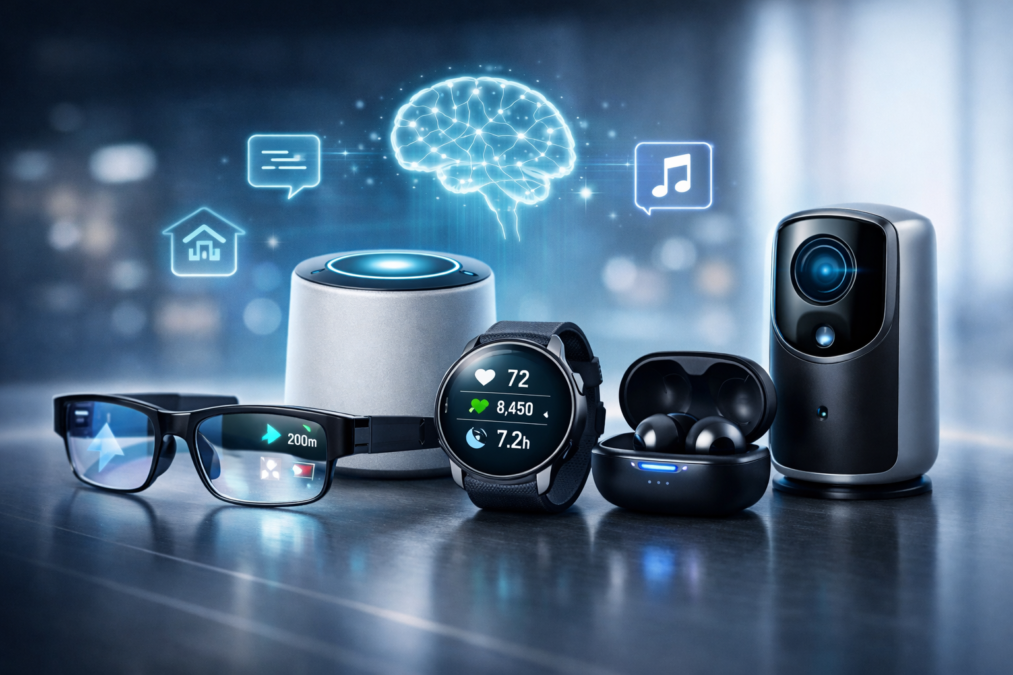
Artificial Intelligence is no longer limited to apps and software. By 2026, AI is becoming deeply embedded into everyday gadgets we use at home, at work, and on the move. What’s changing is not just intelligence, but practicality. The next wave of AI gadgets is focused less on hype and more on solving real problems in simple, usable ways.
Here’s a look at the AI-powered devices that are expected to truly matter in daily life by 2026.
| AI Gadget Category | What It Does | Why It Matters in 2026 | Best For |
|---|---|---|---|
| AI Smartphones | On-device AI for camera, voice, and productivity tasks | Faster processing without cloud dependency | Daily users & professionals |
| AI Smart Glasses | Real-time translation, navigation, and notifications | Hands-free digital assistance | Travelers & multitaskers |
| AI Wearables (Health) | Advanced health tracking with predictive alerts | Early health risk detection | Fitness & health-focused users |
| AI Home Assistants | Context-aware automation & voice control | Smarter, energy-efficient homes | Smart home owners |
| AI EV Systems | Driver assistance & predictive maintenance | Safer and more efficient mobility | EV buyers |
AI Smart Glasses
Smart glasses are moving beyond experiments and into real-world use. By 2026, AI-powered smart glasses are expected to offer:
- Real-time navigation and directions
- Live language translation during conversations
- Hands-free notifications and calls
- Visual search for objects, text, and locations
The biggest shift is usability. These glasses are being designed to look normal, feel light, and integrate naturally into daily routines without replacing smartphones entirely
Samsung Smart Glasses
AI Smartphones That Think Ahead
Smartphones in 2026 will rely heavily on on-device AI rather than cloud processing alone. This means:
- Predictive actions based on daily habits
- Smarter camera processing with scene understanding
- Voice assistants that work offline
- AI-driven battery and performance optimization
Instead of reacting to commands, phones will start anticipating needs, reducing screen time and manual input.
AI Home Assistants That Understand Context
AI speakers and displays are evolving into contextual home assistants. Expect them to:
- Understand who is speaking and respond accordingly
- Control smart homes based on routines, not commands
- Provide proactive alerts for security, energy use, or maintenance
- Integrate deeply with appliances, lighting, and climate systems
These devices are becoming quieter, smarter, and more helpful rather than constantly asking for input.
Complete Home Theatre Setup
AI Wearables for Health and Fitness
Fitness trackers and smartwatches are shifting from tracking data to interpreting it. By 2026, AI wearables are expected to:
- Detect early signs of fatigue or health issues
- Offer personalized fitness and recovery advice
- Adapt workouts based on real-time performance
- Monitor stress and sleep with actionable insights
The focus is moving from numbers to guidance users can actually follow.
AI Audio Devices
Headphones and speakers are becoming intelligent companions. AI-powered audio gadgets will likely offer:
- Adaptive noise cancellation based on surroundings
- Sound tuning based on ear shape and listening habits
- Real-time voice enhancement during calls
- Context-aware audio modes for work, travel, or relaxation
This is especially relevant for users who rely on audio devices throughout the day.
AI Cameras and Vision Devices
Standalone cameras and doorbells are becoming smarter with AI vision. These devices can:
- Identify people, pets, and vehicles
- Reduce false alerts
- Recognize familiar faces
- Provide meaningful notifications instead of constant alerts
AI makes these devices more reliable and less intrusive.
Why These AI Gadgets Will Matter
The biggest change in 2026 is that AI gadgets are becoming invisible helpers rather than attention-seeking devices. They aim to:
- Save time
- Reduce effort
- Improve decision-making
- Blend into daily life naturally
Users will care less about “AI features” and more about how seamlessly these gadgets fit into their routines.
Pros
Highlights practical AI gadgets instead of gimmicks
Covers multiple categories: home, personal, wearable, and office techHelps consumers make informed purchase decisions
Written in an easy-to-understand, human style
Cons
Focuses on gadgets available or expected in 2026, so availability may vary
Limited deep technical analysis for each device
Prices may be high for some premium AI gadgets
Who Should Buy
Tech enthusiasts interested in integrating AI into daily life
Early adopters who want practical smart devices
Professionals seeking AI tools to boost productivity
Looking for Party Companion..
Consumers looking to upgrade home automation and personal tech
Check latest price and offers on Amazon
Final Thoughts
AI gadgets in 2026 are not about futuristic promises. They’re about practical intelligence built into everyday devices. From smart glasses and wearables to audio gear and home assistants, the gadgets that matter will be the ones that quietly make life easier without demanding constant attention.
The future of AI is not louder tech. It’s smarter, simpler, and more human.
For collaborations or official enquiries: 📩 Sathish@techsenseindia.in

Sathish G is a retail and consumer electronics professional with hands-on experience in audio and large format retail operations. He writes about gadgets, EV updates, and audio products with a focus on practical buying guidance and real-world usability.