TSI-055 | TechSenseIndia
Published on: 29 March 2026
why-tv-speakers-sound-bad-and-how-to-fix-it-2026
If you’ve bought a modern TV and felt disappointed by the sound, you’re not alone. Many TVs in 2026 deliver excellent picture quality but still struggle with weak bass, poor dialogue clarity, and flat overall audio. That is because modern TV design focuses heavily on slim panels and stylish looks, leaving very little room for proper speaker hardware.
The good news is that bad TV audio is a very common problem, and in most cases, it can be fixed. Whether your TV sounds too quiet, voices are unclear, or action scenes feel underwhelming, this guide explains why it happens and the smartest ways to improve it without wasting money.
If you’ve bought a modern TV and felt disappointed by the sound, you’re not alone. Many TVs in 2026 deliver excellent picture quality but still struggle with weak bass, poor dialogue clarity, and flat overall audio. That is because modern TV design focuses heavily on slim panels and stylish looks, leaving very little room for proper speaker hardware.
how to build a better home theatre setup
The good news is that bad TV audio is a very common problem, and in most cases, it can be fixed. Whether your TV sounds too quiet, voices are unclear, or action scenes feel underwhelming, this guide explains why it happens and the smartest ways to improve it without wasting money.
In this guide, we’ll look at why TV speakers sound bad, what causes poor sound quality in modern televisions, and the best practical ways to fix it in 2026.
Also Read
JBL Bar 800 vs Bar 800 MK2: What’s New and Which One Should You Buy?
Complete Home Theatre Setup Guide for Indian Homes
Best Soundbars Under ₹30,000 in India (2026): JBL vs Sony vs Samsung vs LG
Quick Answer
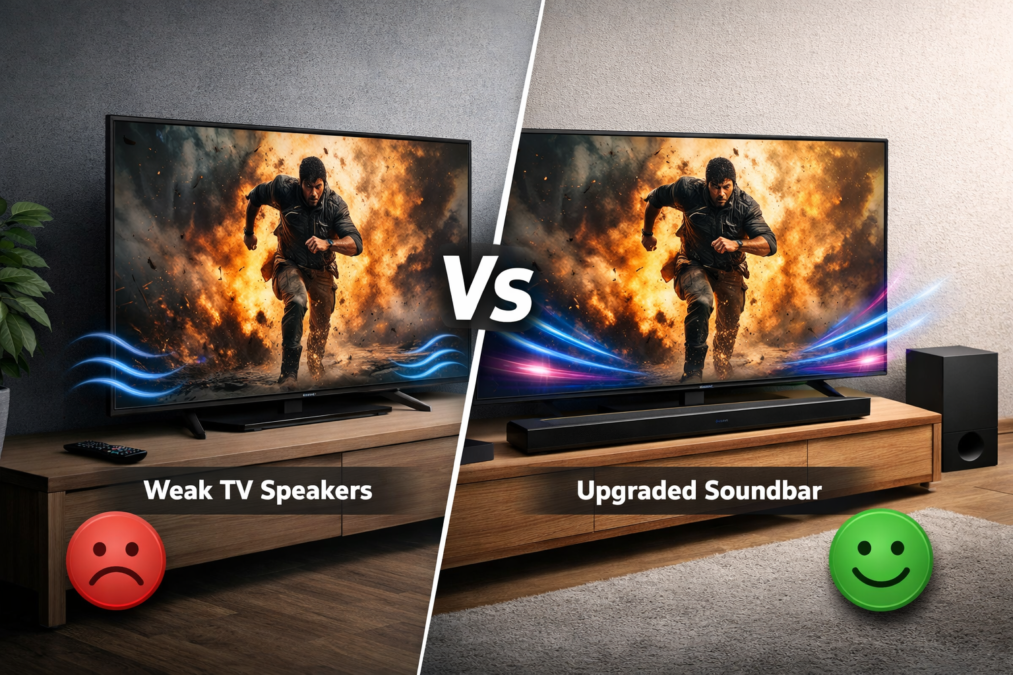
TV speakers usually sound bad because modern TVs are extremely thin, leaving very little space for proper speaker hardware. That often leads to weak bass, limited volume, poor dialogue clarity, and flat overall sound. The best fixes are changing sound settings, improving room placement, or upgrading to a soundbar or external speaker system.
Why Do TV Speakers Sound Bad?
There is no single reason. In most cases, poor TV sound comes from a mix of design limits, tiny speaker size, and poor room interaction.
JBL Bar 800 vs Bar 800 MK2
1. TVs Are Too Thin for Good Audio
Slim TVs look premium, but sound needs physical space. Good speakers need room for:
- larger drivers
- better airflow
- stronger speaker chambers
- deeper bass response
When a TV body becomes ultra-thin, sound hardware is usually compromised first.
2. Speakers Often Fire Downward or Backward
Many TVs do not direct sound straight toward the listener. Instead, sound may fire:
- downward
- backward
- from the rear edges
That means dialogue and detail can get lost before they even reach you properly.
Complete information on Dolby Atmos
https://techsenseindia.in/?p=7194&preview=true
3. Bass Performance Is Very Limited
TV speakers are usually too small to produce strong low-end sound. That is why:
- explosions feel soft
- background music feels thin
- movie scenes lack impact
4. Dialogue Can Sound Unclear
This is one of the biggest complaints. Voices often sound:
- too low
- muddy
- mixed badly with background effects
It becomes even worse in action movies, OTT shows, and scenes with background music.
5. Room Size and Placement Make It Worse
Even a decent TV speaker can sound worse depending on:
- wall distance
- cabinet design
- room echo
- where you sit
So the TV is not always the only problem. Sometimes the room makes weak audio sound even weaker.
Common TV Audio Problems and Their Real Cause
| Problem | What It Feels Like | Likely Cause | Best Fix |
|---|---|---|---|
| Weak bass | Movies and music feel flat | Small speaker drivers and no subwoofer | Use a soundbar with subwoofer |
| Muffled dialogue | Speech is hard to understand | Poor center detail and bad TV audio tuning | Enable dialogue mode or use a 3.1 soundbar |
| Low sound projection | Sound does not reach the room properly | Downward or rear-firing TV speakers | Adjust placement or add front-firing speakers |
| Harsh or thin sound | Volume increases but quality does not | Limited internal audio hardware | Reduce TV sound effects or upgrade audio setup |
| Uneven sound in room | Good in one spot, bad in another | Room reflections and TV placement | Move TV, change seating, or use external speakers |
Why Modern TVs Prioritize Looks Over Sound
Most mainstream TV buyers compare:
- display quality
- bezel size
- smart features
- refresh rate
- design
Very few buyers choose a TV mainly for speaker quality. Because of that, brands often focus more on:
- picture
- slim design
- price competitiveness
Sound becomes secondary unless it is a premium flagship model with a more advanced built-in speaker system.
JBL Bar 500 vs Bar 500 MK2
Are Expensive TVs Better for Sound?
Sometimes yes, but not always enough.
Premium TVs may offer:
- more powerful built-in speakers
- better software tuning
- object-tracking sound features
- improved dialogue modes
But even then, most built-in TV audio still does not match what a decent external soundbar can do.
So a costly TV may sound better than a budget one, but it still may not sound truly cinematic.
How to Fix Bad TV Sound Without Buying Anything
Before upgrading to an external speaker system, try these simple fixes first.
1. Change the Sound Mode
Most TVs have sound presets like:
- Standard
- Movie
- Music
- Clear Voice
- Sports
Try Movie or Clear Voice first. In many cases, these improve balance and dialogue clarity.
2. Turn Off Artificial Effects
Some TVs add effects that make sound worse. Disable unnecessary:
- virtual surround
- aggressive bass boost
- auto volume
- extreme enhancement modes
Sometimes cleaner sound is better than overprocessed sound.
3. Improve TV Placement
Avoid placing the TV:
- too deep inside a cabinet
- too close to a wall if rear-firing
- behind decorative panels
- inside enclosed furniture
Let the speakers breathe.
4. Sit Closer to the TV
This sounds basic, but in small rooms it can help a lot. Weak built-in speakers struggle more as listening distance increases.
Best Ways to Fix TV Sound Properly
If settings and placement do not solve the issue, external audio is the real answer.
1. Buy a Soundbar
For most users, a soundbar is the easiest and best upgrade.
A good soundbar improves:
- dialogue clarity
- bass
- room-filling sound
- movie immersion
For smaller rooms, even a basic 2.1 soundbar can make a big difference. For better dialogue, a 3.1 model is usually better. For movies, 5.1 or Atmos-based setups offer a more immersive experience.
2. Use a Soundbar with Subwoofer
If weak bass is your main problem, go for:
- soundbar + wireless subwoofer
This gives TV sound much more weight and presence.
3. Upgrade to a 3.1 or 5.1 Setup
If you watch lots of movies, sports, or OTT shows, a 3.1 or 5.1 setup makes much more sense than relying on TV speakers alone.
4. Consider Bluetooth or External Speakers for Basic Use
If you don’t want a full home setup, even a decent external speaker can sound better than a TV’s built-in speakers, especially for casual use.
Which Fix Is Best for You?
Choose TV settings adjustment if:
- your sound issue is mild
- your room is small
- you do not want to spend now
Choose a 2.1 soundbar if:
- you want better sound with minimal setup
- your TV sounds flat and weak
- you want basic bass improvement
Choose a 3.1 soundbar if:
- dialogue clarity matters most
- you watch a lot of movies and OTT content
Choose a 5.1 or Atmos setup if:
- you want a more cinematic experience
- you have a larger room
- you care about surround effects
Bar 1000 MK2 explained
Do You Really Need a Soundbar in 2026?
For many people, yes.
Modern TVs continue to improve in picture quality, but built-in audio still remains a compromise. If you care about:
- movie watching
- cricket or sports commentary
- clear voices
- better music playback
then a soundbar is one of the most practical upgrades you can make.
Pros and Cons of Fixing TV Audio with a Soundbar
Who Should Read This?
This guide is useful for:
- people who recently bought a new TV and are unhappy with the audio
- users who find dialogue hard to understand
- movie lovers who want more immersive sound
- anyone wondering whether a soundbar is actually worth buying
Pros and Cons of Relying Only on TV Speakers
Pros
- no extra cost
- no additional setup required
- cleaner and simpler entertainment space
Cons
- weak bass
- poor dialogue clarity
- limited room-filling sound
- underwhelming movie and sports experience
Who Should Buy a Soundbar?
You should seriously consider a soundbar if:
- voices on your TV sound muffled
- you watch lots of movies, OTT shows, or sports
- you want stronger bass and better overall sound
- your room is medium or large
- your TV speakers sound thin even at higher volume
Who Can Still Manage with TV Speakers?
You may not need a soundbar immediately if:
- you mostly watch casual content at low volume
- your room is small
- your TV already has decent built-in audio
- you are okay with basic sound and do not expect cinematic performance
Final Verdict
TV speakers sound bad mainly because modern televisions are built to be slim, stylish, and display-focused, not audio-focused. That design trade-off leads to weak bass, poor projection, and unclear dialogue in many real-world situations.
The good news is that the fix is usually straightforward. You can start by improving settings and placement, but for most people, a soundbar is the real upgrade that makes the biggest difference. Even a modest setup can make movies, shows, and everyday viewing feel far better than built-in TV speakers ever could.
If you’ve been unhappy with your TV’s audio, you’re not imagining it. The problem is real, and the fix is usually worth it.
Why do modern TVs sound worse than older TVs?
FAQs
Because modern TVs are much thinner, leaving less room for proper speakers and deeper sound output.
Can TV settings improve bad sound?
Yes, to a point. Changing sound modes and disabling poor audio effects can help, but hardware limits still remain
What is the best fix for unclear TV dialogue?
A 3.1 soundbar with a dedicated center channel is usually one of the best solutions for clearer voices.
Do expensive TVs still need soundbars?
In many cases, yes. Premium TVs may sound better than budget models, but most still benefit a lot from external audio.
Check Latest Price & Offers
For collaborations or official enquiries: 📩 Sathish@techsenseindia.in

Sathish G is a retail and consumer electronics professional with hands-on experience in audio and large format retail operations. He writes about gadgets, EV updates, and audio products with a focus on practical buying guidance and real-world usability.