TSI-042 | TechSenseIndia
Published Date: February 27, 2026
ai-voice-assistants-2026
Introduction
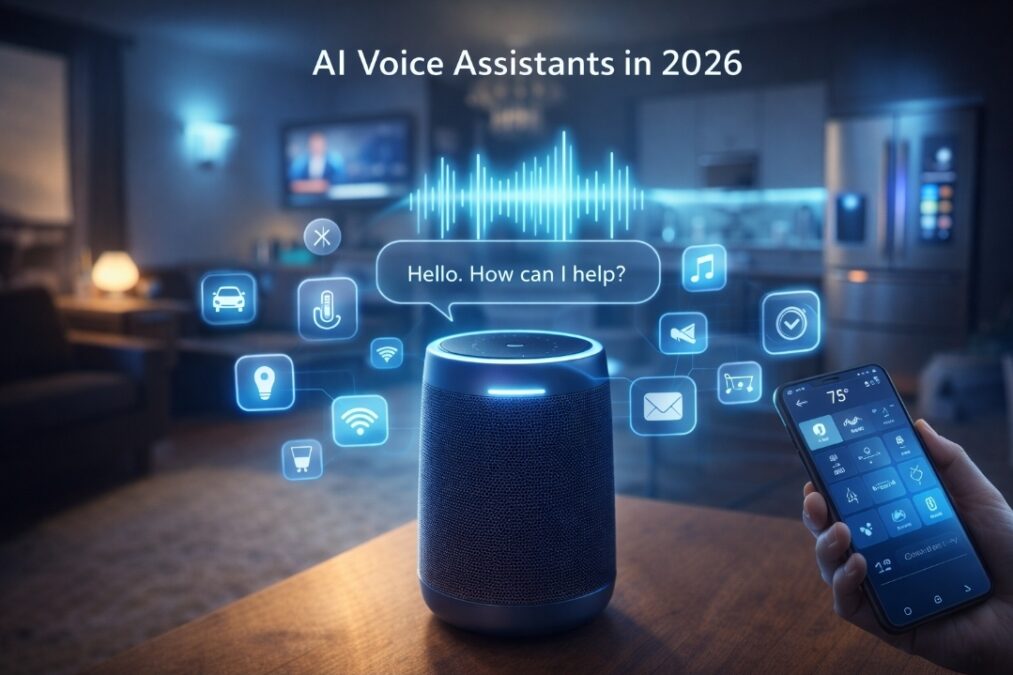
AI voice assistants are no longer just smart speakers—they’re becoming central to how we interact with technology in 2026. From controlling smart homes to managing work tasks, scheduling reminders, or even handling complex queries, devices like Alexa, Google Assistant, and Siri are integrating seamlessly into daily life. This post explores how AI voice assistants are transforming productivity, convenience, and connectivity for users around the world.
Voice assistants are also playing a key role in wearable tech like smart glasses, making everyday interactions more seamless.
A few years ago, AI voice assistants felt like a fun gadget feature.
Today in 2026, they’ve quietly become part of daily life.
Ask someone how they set an alarm, check the weather, or control home devices, and increasingly the answer is
“I just asked my voice assistant.”
But this shift is not just about convenience. It’s reshaping how we interact with tech in a fundamental way.
Many of these AI-driven innovations were highlighted at Mobile World Congress 2026, showcasing the future of connected devices
Smarter Conversations, Not Just Commands
Earlier versions of voice assistants were simple:
“Play music.”
“Set timer.”
“Call Mom.”
Now, they handle context.
Try asking:
- “Remind me to pay the electricity bill next Thursday”
- “Find a budget Bluetooth speaker under ₹5,000”
- “Is this week good for travel to Goa?”
These are not simple commands — they require understanding context, intent, and follow-up reasoning.
That’s a huge leap from just “on/off” requests.
Voice Control in Every Room
In 2026, voice assistants are everywhere:
In the home
- Lights, fans, and air purifiers respond to natural speech
- Smart TVs and soundbars integrate voice control natively
- Fridge and laundry appliances can read recipes or set cycles by request
This reduces the friction of apps and remote controls.
Modern smartphones are becoming smarter with deeper AI integration, improving everything from voice commands to automation.
Growing up tech-native, many young users now treat voice commands as normal — not futuristic.
AI Assistants on the Move
Voice assistants aren’t limited to the home.
In cars, they:
- Navigate traffic hands-free
- Read messages aloud
- Suggest music based on mood
On phones, they:
- Draft messages
- Summarize long texts
- Manage multitasking without tapping
In 2026, voice interactions feel like a natural extension of how we think, not how we click.
Voice assistants are now integrated into smart speakers, enhancing the overall audio experience.
Personalization Without Effort
Why is adoption increasing?
Because voice assistants now learn:
- Your schedule
- Your preferences
- Your routine
Tell your assistant once:
“I leave home at 8 am”
Later, without asking, it might remind you:
- “Traffic’s heavier than usual today”
- “You may want to charge your phone”
This feels less like a tool and more like an assistant.
AI Gumdrop
Privacy and Trust Gained Ground
Earlier objections to voice assistants focused on privacy concerns.
In 2026, major improvements in local processing and opt-in permissions mean users have more control.
Things like:
- Voice data stored locally
- Custom privacy profiles
- Temporary listening only during wake words
These build real trust instead of fear.
What’s Next
Voice assistants are moving toward:
- Emotional context (tone and mood detection)
- Multilingual fluency without switching settings
- Seamless transitions between devices
Soon, your phone, car, and home assistant will talk to each other on your behalf.
The Bottom Line
Voice assistants in 2026 are no longer novelties.
They are assistants — not replacements for humans — but extensions of how we communicate with machines.
Tech that listens well, adapts to you, and anticipates needs is no longer futuristic.
It’s everyday life.
Pros
Hands-free control: Manage smart devices, apps, and schedules using just your voice
Cross-platform integration: Works with smartphones, speakers, smart TVs, and home automation
Productivity boost: Can automate reminders, emails, and information searches
Accessibility: Helps people with mobility or visual challenges interact with technology
Continuous learning: AI adapts to user behavior and preferences over time
Bar 500 MK2
Cons
Privacy concerns: Voice data collection may be a concern for some users
Device dependency: Works best with compatible hardware and software ecosystem
Occasional errors: Misinterpretation of commands can occur, especially in noisy environments
Who Should Buy
UseTech enthusiasts looking to integrate AI into daily lifeHome automation users seeking smarter control over devices
Professionals needing hands-free productivity tools
Anyone interested in making technology more accessible and intuitive
Check latest price and offers on Amazon
Final Verdict
AI voice assistants are becoming essential tools for everyday tech in 2026. While privacy and compatibility are factors to consider, the convenience, productivity benefits, and accessibility improvements make them a worthy addition for both personal and professional environments. As AI evolves, these assistants will continue to reshape how we interact with technology in meaningful ways.
For collaborations or official enquiries: 📩 Sathish@techsenseindia.in

Sathish G is a retail and consumer electronics professional with hands-on experience in audio and large format retail operations. He writes about gadgets, EV updates, and audio products with a focus on practical buying guidance and real-world usability.