TSI-017 | TechSenseIndia
Published Date: 5 February 2026
smart-glasses-2026-everyday-use
Introduction
For a long time, smart glasses felt like a futuristic idea that wasn’t ready for real life. Early attempts were bulky, expensive, and didn’t offer enough value for everyday users. Most people saw them as experimental gadgets rather than something they would actually wear outside.
In 2026, the situation looks very different. Major tech companies are investing heavily in wearable technology, and smart glasses are becoming lighter, more stylish, and far more useful. Instead of trying to replace smartphones completely, the new generation focuses on practical features that fit naturally into daily routines.
Innovations like smart glasses were also a key highlight at Mobile World Congress, showcasing how AI is moving into everyday devices.
From hands-free navigation to real-time notifications and AI assistance, smart glasses are finally reaching a stage where they make sense for everyday use.
For years, smart glasses sounded exciting but felt impractical. In 2026, that story is changing. With better design, useful features, and strong backing from big tech companies, smart glasses are finally moving from demos to daily life.
Samsung Confirms Smart Glasses Launch in 2026: What It Means for Everyday Tech
| Model / Brand | Key Features | Battery Life | Best For | Price (INR) | Pros | Cons |
|---|---|---|---|---|---|---|
| Meta Glasses 2026 | AR navigation, Voice assistant, Lightweight frame | 6 hours active use | Tech enthusiasts, Early adopters | ₹80,000 | Advanced AR, Sleek design | Expensive, Limited apps at launch |
| Apple AR Glasses | Health tracking, Siri integration, AR apps | 8 hours | Apple ecosystem users, Professionals | ₹1,50,000 | Premium features, Seamless ecosystem | Very expensive, Limited availability |
| Snap Spectacles 5 | Camera, Social media sharing, Lightweight | 5 hours | Social media users, Casual users | ₹45,000 | Fun features, Compact design | Limited productivity features, Moderate battery |
| Bose Frames Next Gen | Audio-focused, Voice assistant, Comfortable | 10 hours | Music lovers, Outdoor use | ₹35,000 | Great sound, Comfortable | No AR display, Limited features |
| Lenovo Smart Glasses 2 | Notifications, Productivity apps, Lightweight | 7 hours | Office workers, Productivity-focused users | ₹50,000 | Affordable, Good productivity support | Limited AR apps, Smaller ecosystem |
What Are Smart Glasses, Really?
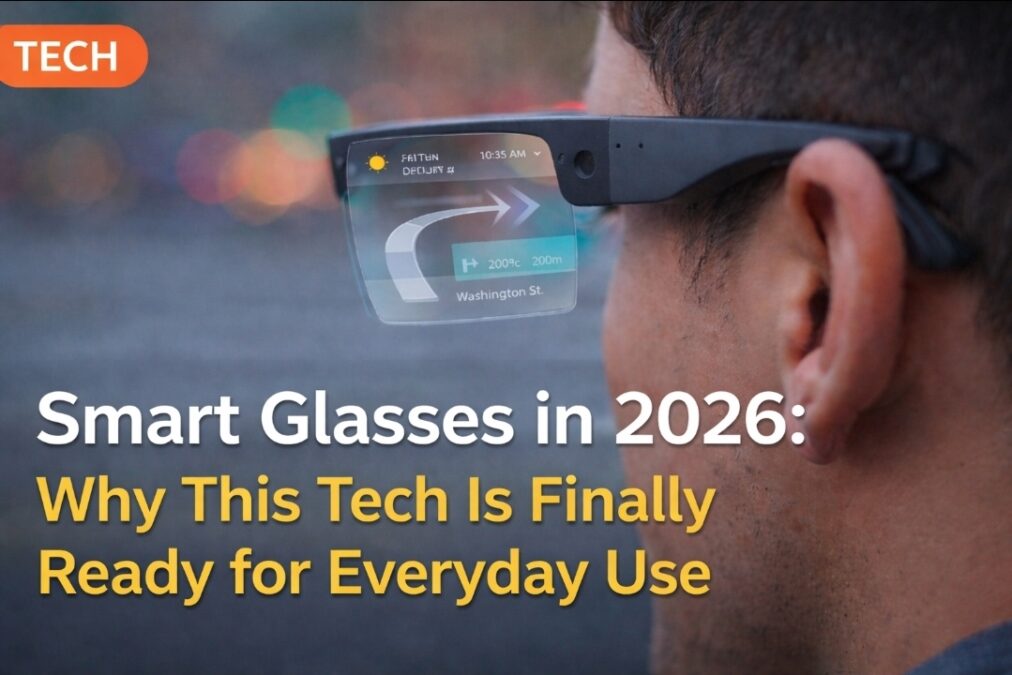
Smart glasses look like normal eyewear but come with built-in tech like cameras, speakers, microphones, and displays. They connect to your smartphone and work hands-free. No screens to hold, no constant tapping.
Why 2026 Is the Turning Point
Earlier versions failed mainly due to poor battery life, bulky designs, and unclear use cases. Now, things are different
.Lighter frames that look normal
All-day battery life for basic tasks
Most smart glasses still rely on smartphones for processing and connectivity, making them an extension of modern mobile devices.
AI voice assistants that actually work well
Strong focus on privacy and user control
Big brands are investing heavily, which means better software support and long-term updates
Real-World Uses That Matter
Smart glasses are no longer just for tech enthusiasts.
Navigation: Directions shown directly in your line of sight
Calls & messages: Hands-free calling and notifications
Content creation: Quick photos and short videos
Work use: Sales, training, field service, and remote assistance
Battery life remains a key challenge, which is why portable power solutions are still important for users on the go.
For professionals, this saves time. For regular users, it reduces screen dependency.
AI Makes the Difference
The biggest upgrade is AI integration. Smart glasses can now summarize messages, translate languages in real time, and respond to voice commands naturally. This makes them useful, not distracting.
Are Smart Glasses Replacing Smartphones?
Not yet. Think of them as an extension, not a replacement. Smartphones remain central, but smart glasses reduce how often you need to pull them out.
Pros of Smart Glasses in 2026
Lightweight and more comfortable than earlier models
AI-powered assistance for daily tasks
Hands-free convenience
Better battery performance
Stylish designs that look like regular eyewear
Useful for both personal and professional use
Cons and Challenges
Still relatively expensive compared to other wearables
Privacy concerns due to built-in cameras in some models
Limited app ecosystem compared to smartphones
Not everyone may feel comfortable wearing connected eyewear all will liked it.
Final Thoughts
Smart glasses in 2026 are no longer just experimental gadgets. With better design, improved battery life, and meaningful AI features, they are becoming practical for everyday use.
Smart glasses are becoming a key part of the future tech ecosystem, combining AI, connectivity, and real-world usability. If you want to explore more innovations, check our coverage of Mobile World Congress 2026, along with our insights on AI trends, smartphone advancements, and EV technology shaping the future.
While they may not replace smartphones anytime soon, they offer a convenient way to access information, stay connected, and complete tasks without constantly looking at a screen.
As technology continues to improve and prices become more competitive, smart glasses could become one of the most important wearable devices of the next few years. For now, 2026 looks like the year when this long-promised technology finally starts to fit naturally into everyday life.
The Meta Glasses 2026: 5 Features That Will Change How You See the World
https://techsenseindia.in/?p=3975&preview=true
For collaborations or official enquiries: 📩 Sathish@techsenseindia.in
k

Sathish G is a retail and consumer electronics professional with hands-on experience in audio and large format retail operations. He writes about gadgets, EV updates, and audio products with a focus on practical buying guidance and real-world usability.