TSI-052 | TechSenseIndia
Published Date: 20 March, 2026
solid-state-batteries-smartphones-2026
Introduction
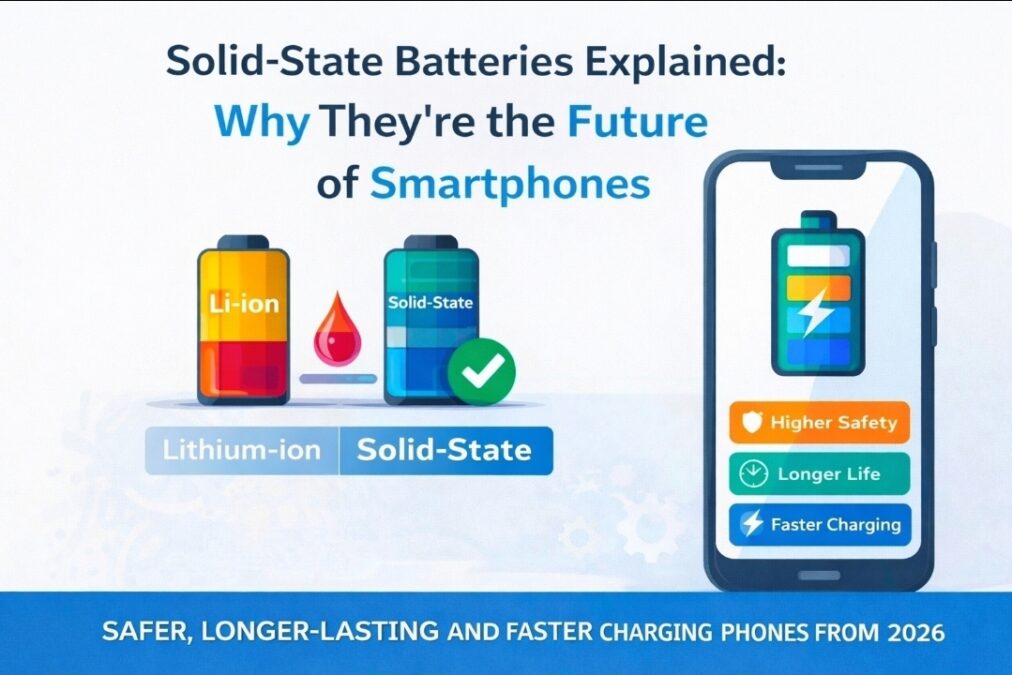
Solid-state batteries are the next big leap in smartphone technology. Unlike conventional lithium-ion batteries, they use a solid electrolyte, offering higher energy density, faster charging, and improved safety. As smartphone brands push for longer-lasting devices with slimmer designs, solid-state batteries could redefine how we use and charge our devices.
Battery technology is finally catching up with how we use smartphones. Solid-state batteries are being talked about a lot in 2026, and for good reason. They promise safer phones, longer battery life, and faster charging.
“future of EV batteries in India”
Solid-State vs Lithium-Ion Battery Comparison
👉 Swipe left to view full comparison
| Feature | Solid-State Battery | Lithium-Ion Battery | Remarks |
|---|---|---|---|
| Energy Density | High (more power in smaller size) | Moderate | Solid-state allows longer battery life for same size |
| Safety | Non-flammable, less risk of overheating | Flammable electrolyte, higher risk of fire | Safer for smartphones and EVs |
| Charging Speed | Faster potential charging | Moderate | Can support ultra-fast charging in future phones |
| Lifespan | Longer cycles, less degradation | Shorter cycles, faster capacity loss | Solid-state lasts longer before replacement |
| Cost | Currently high, expensive to produce | Lower, mass-produced | Costs expected to drop with scale |
| Commercial Readiness | Emerging, limited smartphones & EVs | Widely used | Most devices today still use Li-ion |
What Is a Solid-State Battery?
Unlike today’s lithium-ion batteries that use liquid electrolytes, solid-state batteries use a solid electrolyte. This small change makes a big difference in performance and safety.
Why Solid-State Batteries Matter
Higher safety: No liquid means lower risk of overheating or explosions
Longer battery life: Better energy density in the same size
Faster charging: Less heat allows quicker power delivery
Slimmer designs: Manufacturers can reduce battery size without sacrificing capacity
Are They Available in Smartphones Yet?
Not fully. Most brands are still testing solid-state batteries in labs and limited devices. Experts expect early adoption between 2026 and 2028, starting with premium smartphones and wearables.
“fast charging technology explained”
Which Brands Are Working on It?
Samsung
Toyota (battery tech partnerships)
Apple (long-term research)
Chinese OEMs experimenting with hybrid solid-state designs
Should You Wait for a Solid-State Phone?
If you’re buying a phone now, don’t wait. Current lithium-ion batteries are still reliable and improving every year. Solid-state batteries will first appear in expensive flagship models.
“best power banks for travel”
Final Thoughts
Solid-state batteries are not hype. They are a genuine shift in battery technology. While mass adoption will take time, they will eventually change how long our phones last and how safely they operate.
Pros
Higher energy density for longer battery lifeFaster and more efficient charging
Safer than traditional lithium-ion batteries (less risk of overheating or fire)
Enables thinner and lighter smartphone designs
Future-proof technology for next-gen devices
Cons
Currently expensive to manufacture
Limited availability in consumer devices in 2026
Early adoption may face durability and lifespan challenges.
Who Should Buy
Tech enthusiasts eager to try cutting-edge smartphone technology
Users frustrated with short battery life on current devices
Early adopters who value safety and performance improvements
Check latest price and offers on Amazon
Final Verdict
Solid-state batteries promise to revolutionize smartphones by making them safer, longer-lasting, and faster to charge. While mass adoption is still in progress, keeping an eye on devices with this technology is essential for anyone planning to upgrade in the next few years.
For collaborations or official enquiries: 📩 Sathish@techsenseindia.in

Sathish G is a retail and consumer electronics professional with hands-on experience in audio and large format retail operations. He writes about gadgets, EV updates, and audio products with a focus on practical buying guidance and real-world usability.